
News
Total surveillance law proposed in Serbia
The public debate on the Draft Law on Internal Affairs has officially introduced into legal procedure provisions for the use of mass biometric surveillance in public spaces in Serbia, advanced technologies equipped with facial recognition software that enable capturing and processing of large amounts of sensitive personal data in real time.
If Serbia adopts the provisions on mass biometric surveillance, it will become the first European country conducting permanent indiscriminate surveillance of citizens in public spaces. Technologies that would thus be made available to the police are extremely intrusive to citizens’ privacy, with potentially drastic consequences for human rights and freedoms, and a profound impact on a democratic society. For that reason, the United Nations and the European Union have already taken a stand against the use of mass biometric surveillance by the police and other security services of the states.
SHARE Foundation has used the opportunity of the Draft Law public debate to submit its legal comments on the provisions regulating mass biometric surveillance in public spaces, demanding from the authorities to declare a moratorium on the use of such technologies and systems in Serbia without delay.
Although modestly publicized, only three weeks long public debate on the disputed Draft Law gathered national and international organizations in a common front against the harmful use of modern technologies. Among others, EDRi, the European network of NGOs, experts, advocates and academics advancing digital rights, reacted. The official letter to the Serbian government and the Ministries of interior and justice states that provisions of the Draft Law allowing the capture, processing and automated analysis of people’s biometric and other sensitive data in public spaces, are incompatible with the European Convention on Human Rights which Serbia ratified in 2004.
“The Serbian government’s proposal for a new internal affairs law seeks to legalise biometric mass surveillance practices and thus enable intrusion into the private lives of Serbian citizens and residents on an unprecedented scale. Whilst human rights and data protection authorities across the EU and the world are calling to protect people from harmful uses of technology, Serbia is moving in a dangerously different direction”.Diego Naranjo, EDRi
Gwendoline Delbos-Corfield, a French MEP from the Greens has warned against the use of these intrusive technologies and further restricting the rights of those living in Serbia, emphasizing that these technologies magnify the discrimination that marginalised groups already face in their everyday life. “We oppose this draft law that would allow law enforcement to use biometric mass surveillance in Serbia. It poses a huge threat to fundamental rights and the right to privacy”, said Delbos-Corfield.
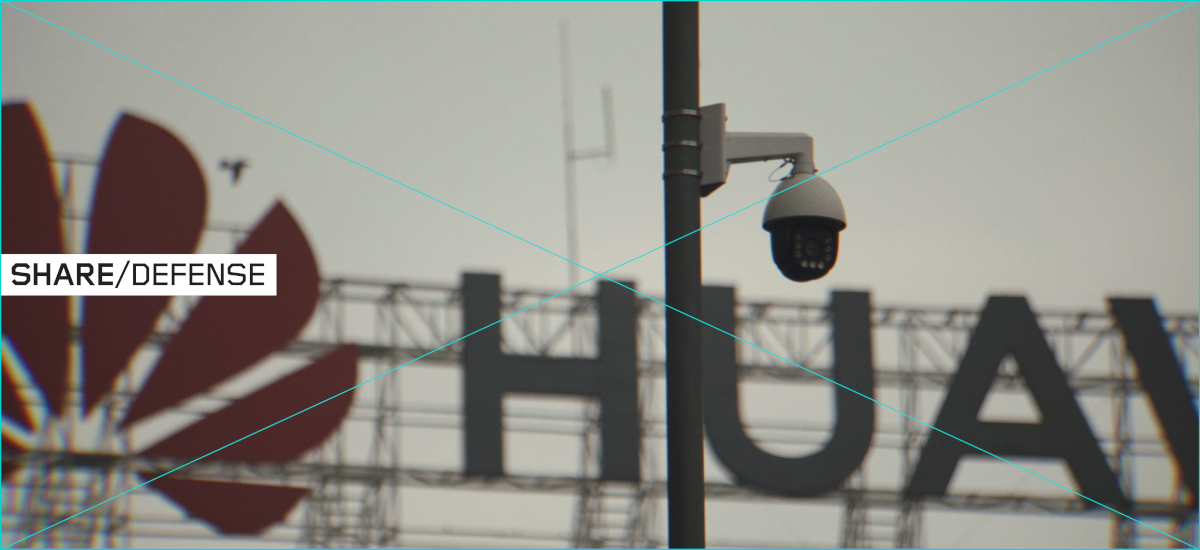
“In Serbia, a country that Freedom House rated as only ‘partly free’, we suspect that the government has already begun the deployment of high-resolution Huawei cameras, equipped with facial recognition technology, in the city of Belgrade. If this draft law comes into effect, the government might have a legal basis for the use of biometric mass surveillance and the use of these cameras. Serbia now runs the risk of becoming the first European country to be covered by biometric mass surveillance. We call on the Serbian government to immediately withdraw the articles of this draft law that regulate biometric mass surveillance.”Gwendoline Delbos-Corfield, MEP, Greens/EFA Group
The disputed provisions stipulate installation of a system of mass biometric surveillance throughout Serbia, without determining the necessity of the proposed measure for all residents of Serbia to be constantly treated as potential criminals by disproportionately invading the privacy of their lives. Of particular concern is the lack of a detailed assessment of the impact that the use of total biometric surveillance can have on vulnerable social groups, but also on journalists, civic activists and other actors in a democratic society.
SHARE Foundation comments on the Draft Law on Internal Affairs
Related content

Digital rights organizations ask for transparency in content removal on Facebook
More than 70 organizations from all around the world, with SHARE Foundation among them, signed an open letter to the Chief Executive Officer of Facebook, Mark Zuckerberg with a request of ensuring transparency and liability for the content removal process on this social network. The letter requests from Facebook to clearly and precisely reveal how much content […]
20. November, 2018.

Return the constitutional provision to the Law on Personal Data Protection
Legal restriction enabling the police, information agencies or private companies to enter the privacy of citizens only when it is prescribed by law has been deleted from the Bill of the Law on Personal Data Protection. The Bill was adopted by the Government of Serbia at its session on 24 September and it is currently in the parliamentary […]
18. October, 2018.

Gender-based digital violence in Serbia: a review of trends
Digital violence against girls and women in Serbia is steadily on the rise, as increasingly disturbing headlines in the media attest. Among the most frequent targets of abusers are female journalists, social activists, politicians, and other prominent women in the public sphere. Additionally, well-known women often experience more extreme forms of this violence. Weak legal […]
20. October, 2024.